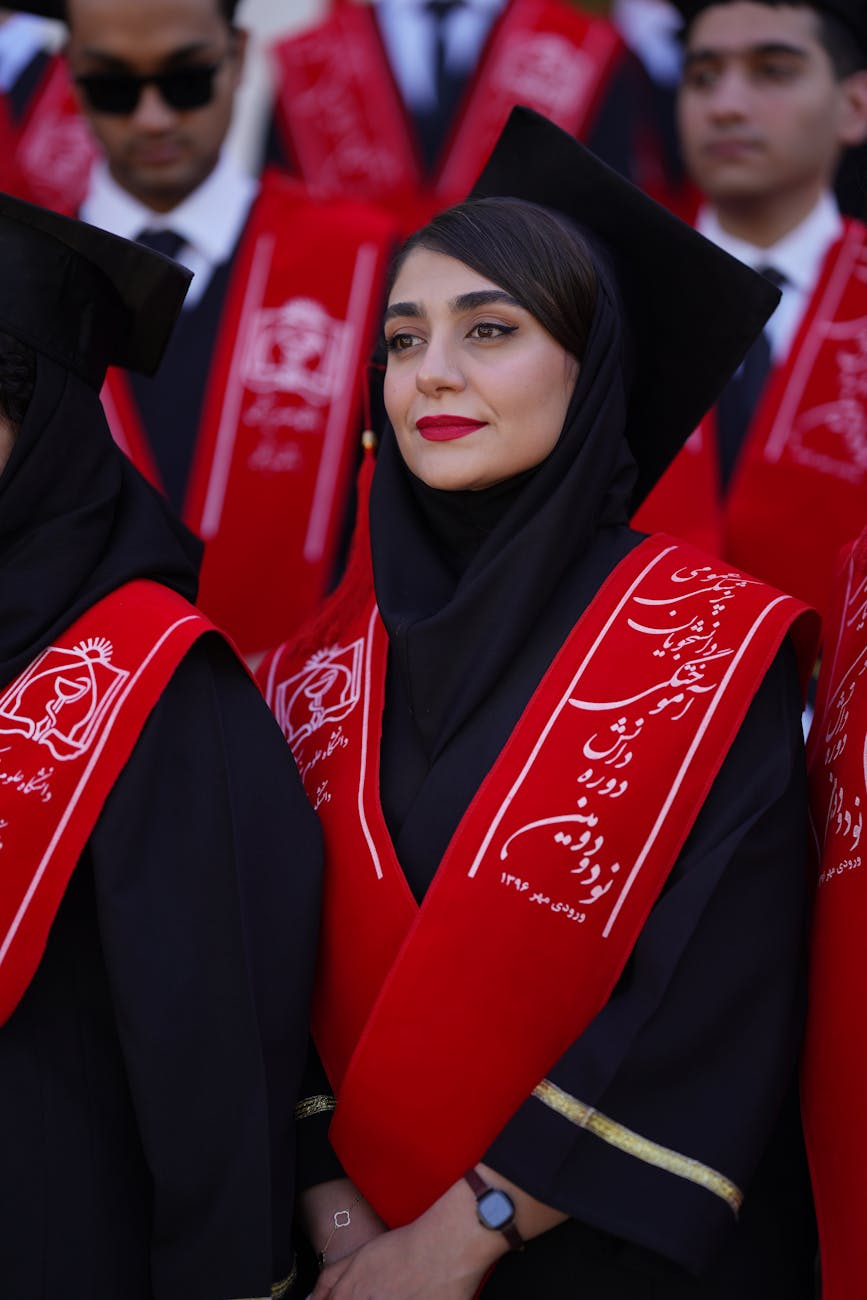
Early Foundations: Reza Shah and the First Pahlavi Period (1925–1941)
Formal education for women in Iran began in 1907 with the establishment of the first primary school for girls. Progress accelerated under the first Pahlavi Shah. In the era from 1925 to the 1940s, women were not required to veil themselves and gained access to universities. In 1935, when Tehran University opened, Iran’s first university admitted both men and women. Reza Shah also pursued a controversial policy of mandatory unveiling, known as Kashf-e hijab, which desegregated some sectors of society but caused many conservative women to withdraw from public life rather than appear uncovered.
Mid-Century Expansion: Mohammad Reza Shah (1941–1963)
Women’s education played a crucial part in promoting the awakening of women and improving conditions during the period from 1946 to 1976, when the number of female students leaped from 94,000 to 1,800,000 at the primary level, from 7,000 to 824,000 at the secondary level, and from 500 to 43,000 at higher education. There were also 12,403 Literacy Corps women working in villages in the mid-1970s.
Education, however, largely reflected and reinforced class and geographic divides. Gains were concentrated in urban centers, and rural women remained largely excluded from these reforms.
The White Revolution and Legal Reforms (1963–1979)
The most dramatic pre-revolutionary expansion of women’s rights came through the White Revolution of 1963, a sweeping modernization program launched by Mohammad Reza Shah Pahlavi. Among the program’s elements were the enfranchisement of women, literacy, and health corps for isolated rural areas.
In 1963, women acquired the right to vote and run for parliament. Under the Family Protection Law, women won the right to petition for divorce and gain child custody. A husband could no longer unilaterally divorce his wife or automatically gain custody of any children. The marriage age for girls was raised from 13 to 18, and men needed the court’s permission to take a second wife.
Women were granted financial aid for higher education, and with the Family Protection Law (1967), women gained legal tools to take control of their personal lives.
In 1968, Farrokhroo Parsa became the first woman to hold a Cabinet position as minister of education. Women’s Literacy Corps and Health Corps were also established, with members charged with spreading literacy and assisting with medical and agricultural projects in underdeveloped rural and urban areas.
Where Things Stood on the Eve of the Revolution
By 1978, on the eve of Iran’s revolution, 22 women sat in parliament, and 333 women served on elected local councils. One-third of university students were female. Two million women were in the workforce, more than 146,000 of them in the civil service.
By 1976, 28 percent of all university students were women, and they had begun to enter many fields not previously open to them, including medicine and law. In 1977, Tehran University adopted a curriculum in women’s studies.
Critical Limitations of the Pahlavi Reforms
Despite these advances, scholars have emphasized that Pahlavi-era reforms were top-down, urban-centric, and largely benefited educated elites. In prerevolutionary Iran, women’s opportunities to enter higher education were much more limited than men’s. In 1976, women constituted only 30 percent of students in higher education. Moreover, women were encouraged by state policies to take up so-called feminine professions and faced discrimination and lower pay when they attempted to enter traditionally male-dominated professions.
The reforms also created deep social divisions. Many traditional and religious women experienced forced unveiling as a violation of identity, and the rapid secularization alienated both the clergy and large segments of the working class and rural population, producing exactly the conditions that would fuel the 1979 revolution.
Pre-1979 Revolution Context
Before 1979, women’s education in Iran had been expanding under the Pahlavi monarchy, though access remained largely urban and elite. By 1976, urban female literacy exceeded 50 percent, while rural rates hovered below 20 percent; compulsory education laws applied nominally to both sexes, but enforcement was uneven, prioritizing boys in resource-scarce regions. In 1976, women constituted only 30 percent of students in higher education, and women were encouraged by state policies to take up so-called feminine professions, facing discrimination and lower pay when attempting to enter traditionally male-dominated fields.
Immediate Post-Revolutionary Restrictions (1979–1989)
The Iranian Revolution of March 1979 ushered in a period of conservative leadership that altered the role and conception of the new model female in Iranian society. The newly enacted Constitution of the Islamic Republic of Iran emphasized the importance of women’s economic and social well-being yet did not guarantee the right to education. Immediately following the Revolution, universities and many high schools were shut down, not to be reopened for another 3 years. During this time, many female faculty were excused from their positions, and many women lost their jobs.
Between 1980 and 1983, universities were closed to “purify” them from the influences of the ongoing secularization process. When they were reopened, women were barred from all technical and engineering fields, and numerous restrictions were introduced on male-female interactions, including the implementation of segregated classrooms.
Beginning in 1980, the Ministry of Education directed female faculty and students to wear Islamic dress. The institution of veiling throughout Iran in 1981 extended the compulsion to women beginning at 6 years of age.
Rising Enrollment Despite Restrictions
One of the most counterintuitive findings in the scholarly literature is that women’s university enrollment increased significantly in the decades following the Revolution.
Following the 1979 revolution, women’s access to higher education in Iran increased dramatically. In just two decades, higher education went from a privilege afforded to a tiny minority of women to a social norm and an “Islamic” right for the majority.
The transition to an Islamic state led many traditional families to allow their daughters to be educated beyond elementary school, partly because classes were newly segregated by gender.
The 1979 Islamic revolution allowed previously sheltered religious women, who generally would shy away from higher education because attending a university might require relocation, to challenge themselves by relying upon an interpretation of Islam that facilitated women’s participation in public spaces, which today is often called Islamic feminism.
Today, women in Iran represent over 60% of university students at the undergraduate level. This paper explores how the contradictions and complexities of politics within the Islamic Republic impact women’s lives and how women themselves have been able to bring gender justice to the core of Iranian politics.
Payame Noor University and Distance Education (1988–Present)
The most important institutional development for women’s access to higher education through distance modalities was the establishment of Payame Noor University (PNU).
Payame Noor University was founded in 1988 as the country’s first distance-learning institution, with 494 local study centers and units throughout Iran and 43 overseas centers. The name “Payame Noor” means “the message of light” in Persian.
PNU was established by decisions of the Supreme Council of the Cultural Revolution of Iran in 1986 and took its first intake in five degree programs at 28 study centers. It is a member of the Asian Association of Open Universities (AAOU), the International Council for Open and Distance Education (ICDE), and UNITWIN/UNESCO.
PNU’s strategic objectives emphasize the popularization of higher education and the creation of educational opportunities for individuals unable to attend traditional universities due to geographic, temporal, or occupational constraints. Degrees awarded are officially recognized equivalently to those from other state universities, facilitating broader societal access to credentials.
PNU became especially significant for rural and traditional women. PNU is perceived as a strength in providing accessible higher education across Iran, with its open admission policy and distance-learning model enabling enrollment of over 1 million students historically, particularly those in remote or rural areas unable to attend traditional universities. This flexibility accommodates working professionals and reduces logistical barriers, such as transportation and dormitory costs, while allowing self-paced study without mandatory class attendance.
Reforms and New Restrictions (1989–2012)
In 1989, the First Economic, Social, and Cultural Development Plan of the Islamic Republic of Iran (1989–1993) identified improving women’s educational opportunities as a key target for the incoming administration. Following the death of Khomeini in 1989, President Rafsanjani began a process of scaling back restrictions on women’s education.
Between 1997 and 2005, under the reformist government of President Khatami, women’s access to higher education significantly improved, opening the doors to academic fields that had previously been reserved for men.
Then in 2012, a sharp reversal occurred. Iran’s National Education Assessment Organization published a manual listing majors at various universities that had been “single-gendered,” meaning only males or females would be permitted to study that subject. More than 60 universities across the country made changes, with restrictions on around 600 majors. The list of banned majors included several technical and applied science majors, including engineering, some of the highest-paying fields for graduates. Women may now respond by pursuing higher education online, which the government may have a harder time restricting. Over the last three decades, Iranian women have shown again and again that they can come up with new ways to pursue their goals and frustrate the government’s best-laid plans.
Human Rights Framework
On September 22, 2012, Human Rights Watch urged Iran to reverse the new policy, claiming that such restrictions are a violation of the international right to education for everyone without discrimination.
The UN Special Rapporteur noted in a 2015 report that significant discrimination against women still persists in the political and economic spheres, overshadowing the gains made in education. The Special Rapporteur also noted that despite 14 recommendations made to alleviate the obstacles currently preventing equal gender attainment in the educational sphere, the Rouhani government rejected consideration of all of them.
Personal Reflection
Before this week’s investigation, I assumed that Online Distance Learning (ODL) outside the Western world was primarily a tool for expanding access — a deliberate policy choice made as a long-term goal to improve the education of the citizenry. Now I think it is often a practical response to a systemic critical need, often during a crisis, built for one urgent problem and then adapted, sometimes unexpectedly, by populations the designers never had in mind.
I have a personal connection to Iran, the 1979 Islamic Revolution, and women’s education. I dated my Iranian boyfriend throughout college and married him in July 1979, only a few months before the revolution. Though I never visited Iran, through phone calls and visits, I developed deep personal connections with his parents and his youngest sister, Faroneck. Though we divorced in 1985, I had watched his family — and especially Faroneck — try to navigate their futures during a tumultuous time. It was hard to imagine a future for her without a college education.
The Oumarou paper reinforced something my Iran research had already suggested. Cameroon turned to radio-based teacher training not out of an idealistic, planned vision for open education, but because brain drain and falling qualification standards had created a crisis in classroom quality. Iran founded Payame Noor University in 1988, not to serve women but to absorb the educational needs of men returning from the Iran-Iraq War. In both cases, ODL was a patch on a rupture. And in both cases, the people who most needed it found it and used it — undertrained teachers in Cameroon, and women in Iran who made a system built for veterans entirely their own.
What surprised me most was the decline in enrollment after PNU moved its curriculum online. I expected digital access to expand reach. Instead, inadequate broadband infrastructure and poor e-learning design reduced it. As an instructional design graduate student, I believe that good intentions in educational technology mean nothing without pre-existing infrastructure access and quality design.
As a footnote: Faroneck completed her college education and eventually moved to the United States. I find myself thinking about her now as the current U.S. administration engages Iran in war and at home moves to eliminate the “professional” designation from graduate programs in education and nursing — a change that would restrict access to federal loans and funding in two fields that are predominantly female. Faroneck watched governments use policy to limit women’s educational and professional ambitions before. Now I am watching similar policies take shape here, in the country where I thought that couldn’t happen. And strangely, like the Iranian women I researched, I am pursuing my master’s degree through distance education at the very moment policies seem designed to make that harder. It feels like a small but meaningful piece of poetic justice.
References
Chatham House. (2022, December). Iran: Decades of female anger rocks the regime. https://www.chathamhouse.org/publications/the-world-today/2022-12/iran-decades-female-anger-rocks-regime
Encyclopaedia Iranica. (2012). Education XXVI: Women’s education in the Pahlavi period and after. https://www.iranicaonline.org/articles/education-xxvi-womens-education-in-the-pahlavi-period-and-after/
Encyclopaedia Iranica. (2012). Feminist movements III: In the Pahlavi period. https://www.iranicaonline.org/articles/feminist-movements-iii/
Foundation for Iranian Studies. (n.d.). Women’s milestones: Pre-revolution. https://fis-iran.org/women-center/pre-revolution-milestones/
United States Institute of Peace. (n.d.). The women’s movement [Iran Primer]. https://iranprimer.usip.org/resource/womens-movement
Washington Institute for Near East Policy. (n.d.). Iranian daughters: Struggling for the rights their mothers lost in the revolution. https://www.washingtoninstitute.org/policy-analysis/iranian-daughters-struggling-rights-their-mothers-lost-revolution
Hering, L., Baiardi, A., & Namini, J. E. (2021). Female admission cap in higher education: The case of Iran. EconStor. https://www.econstor.eu/bitstream/10419/248757/1/21073.pdf
Human Rights Watch. (2012, September 22). Iran: Ensure equal access to higher education. https://www.hrw.org/news/2012/09/22/iran-ensure-equal-access-higher-education
International Association of Universities. (n.d.). Payame Noor University [Institution profile]. World Higher Education Database. https://www.whed.net/detail_institution.php?KDo2MF0sMyxULCM8YApgCg=%3D
Rezai-Rashti, G. M. (2015). The politics of gender segregation and women’s access to higher education in the Islamic Republic of Iran: The interplay of repression and resistance. Gender and Education, 27(5), 469–486. https://doi.org/10.1080/09540253.2015.1045457
Rezai-Rashti, G. M., & Moghadam, V. M. (2011). Women and higher education in Iran: What are the implications for employment and the “marriage market”? International Review of Education, 57(3–4), 419–441. https://doi.org/10.1007/s11159-011-9217-9
Rezai-Rashti, G. M., Mehran, G., & Abdmolaei, S. (Eds.). (2019). Women, Islam and education in Iran. Routledge. https://doi.org/10.4324/9780429323997
United States Institute of Peace. (2020, August 11). Part 1: Phases of the women’s movement [Iran Primer]. https://iranprimer.usip.org/blog/2020/aug/11/iranian-womens-movement-four-phases
United States Institute of Peace. (2012, August 20). Iran curtails female education [Iran Primer]. https://iranprimer.usip.org/blog/2012/aug/20/iran-curtails-female-education Winn, M. K. (2016). Women in higher education in Iran: How the Islamic Revolution contributed to an increase in female enrollment. Global Tides, 10, Article 10. https://digitalcommons.pepperdine.edu/globaltides/vol10/iss1/10/