History
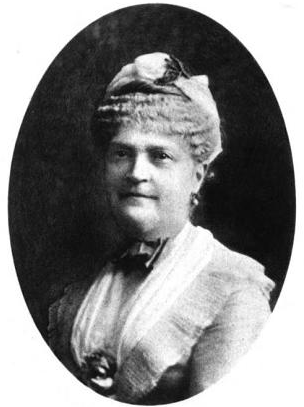
Anna Eliot Ticknor (1823 – 1896) was an early pioneer in distance learning and a champion of women’s education across all classes. Anna’s father was a Harvard professor of modern languages and the founder of the Boston Public Library. With her mother being a writer and her cousin Samuel Eliot, a notable American historian, Ticknor grew up with deep connections to Harvard and Boston’s intellectual elite. Ticknor is often considered “the mother of correspondence schools” (Anna Eliot Ticknor, 2025).
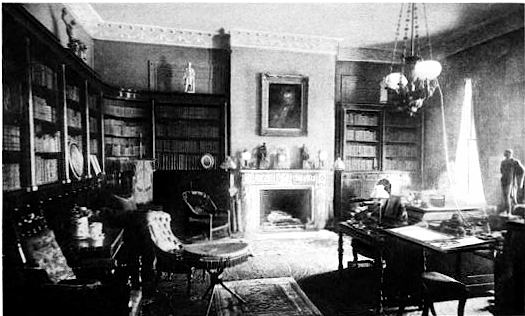
From her home in Boston, Ticknor founded the first correspondence school for women in 1873, establishing the Society to Encourage Studies at Home (the Society). The Society focused on distance education for women of all economic classes and geographic locations, including those who manage the day-to-day needs of their homes and families. Ticknor worked to keep the Society quiet by staying largely unadvertised and is described as “an invisible woman leading a ‘Silent University’”(Cole, 2012).“Ticknor and her friends wanted to give away what men had long refused to allow women to buy: a liberal education”(Bergmann, 2001).
Students were international, included all races, economic classes (including previously enslaved women), and people with disabilities. She offered both foundational and advanced learning opportunities to accommodate women with a wide range of educational backgrounds, including those with little prior education. The Society’s diverse student population reached 7,086 students over 24 years of its existence (Bergmann, 2001). Among the Society’s notable students, Charlotte Perkins Gilman became influential in feminism, and Mary Parker Follett in management theory.
The Society’s 200 unpaid volunteer women called themselves “correspondents” rather than “instructors” to avoid conflict with male-only institutions (Bergmann, 2001). These correspondents maintained a “warm correspondence” with their students—a progressive sociocultural approach that differed markedly from British models, which left students to complete courses independently without support.
The Society also deviated from English models by providing an individually planned curriculum and by allowing interactive communication with instructors via mail (Anna Eliot Ticknor, 2025). For a $2.00 annual fee, any woman over 17 with access to the mail could enroll in courses across six departments: science, history, literature, art, French, and German. The Society was dissolved in 1897 after Anna Ticknor’s death in 1896. After the Society’s dissolution, the Anna Ticknor Library Association was formed as a lending library including the Society’s books, materials, photographs, and other documents. This lending library was later donated to the Boston Public Library and the Fort Worth Carnegie Library.
Influences on Distance Education
As was noted in our assignment instructions, women’s influence on distance education is often under-recognized. In a doctoral dissertation, Cole (2012) argues that Anna Eliot Ticknor’s vision and the work of the Society heavily influenced the development of the Chautauqua Literary and Scientific Circle (CLSC), founded in 1878, which is often considered the most significant distance learning and correspondence school of its time, with an estimated 500,000 people enrolling between 1878 and 1900.
Influences on Women’s Education
Ticknor never sought to challenge higher education’s male-only admissions, but wanted to make education available to all women, which addressed an insurmountable gap for many. By the late 1800s, there were only a handful of women’s universities or co-educational institutions. It wasn’t until 1972 with Title IX that women gained full legal access to higher education without discrimination based on sex. Anna Eliot Ticknor’s correspondence society helped to bridge that gap early on and became a significant step towards the open higher educational opportunities for women today.
Why I Chose Anna Eliot Ticknor
As I grow older and better understand the systemic institutional prejudice against women in all aspects of life, for the purposes of this course, I am drawn to learn more about the history of women in education and how women have shaped it. I did not know about Anna Eliot Ticknor’s contributions to distance and women’s education until my research for this assignment. It was an honor to learn about her, her work, and how she has helped me, as a woman, working online to earn a MEd in Learning Technology.
References
- Anna Eliot Ticknor. (2025, May 27). In Wikipedia. https://en.wikipedia.org/wiki/Anna_Eliot_Ticknor
- Bergmann, H. F. (2001). “The silent university”: The Society to Encourage Studies at Home, 1873–1897. The New England Quarterly, 74(3), 447–477. https://www.jstor.org/stable/3185427
- Cole, E. R. (2012). The invisible woman and the silent university [Doctoral dissertation, University of Southern Mississippi]. The Aquila Digital Community. https://aquila.usm.edu/dissertations/538
- Thammasnong, J., & Branco Colati, J. (2025, September 5). Get to know the founding commissioners: Anna Eliot Ticknor. MBLC Blog. Massachusetts Board of Library Commissioners. https://mblc.state.ma.us/mblc_blog/2025/09/05/hmblc-ticknor/